Rewriting the Holidays After Divorce: Gentle Ways to Care for Yourself, Your Kids, and Your Traditions

The holidays can magnify everything—joy and magic, yes, but also grief, loneliness, and logistical stress. After divorce or separation, the season that once ran on autopilot can suddenly feel like a high-stakes puzzle: two homes, overlapping families, finances under strain, new partners to consider, and little hearts trying to make sense of change. If you’re facing your first (or fifth) holiday season post-divorce, you’re not alone, and there are ways to move through it with more steadiness, compassion, and intention.
We help parents across California navigate big transitions like this. Below you’ll find both practical tools and emotionally attuned guidance to help you honor what hurts, support your children, and build new rituals that actually fit your life now.
Key Takeaways
Set clear plans early and put them in writing.
Protect your energy with boundaries and simple scripts.
Keep some traditions, retire others, and invent a few new ones.
Offer kids steady, age-appropriate honesty and predictable routines.
Use therapy and co-parenting skills to lower conflict and lift connection.
Why the Holidays Feel So Tender After Divorce
Holidays are more than dates on a calendar—they’re rituals, roles, and stories we repeat each year. After divorce, those stories are disrupted. You may be grieving the family table you pictured, adjusting to a new schedule, or feeling the weight of being a “single parent” at events where couples and grandparents are everywhere. Shame and “shoulds” can creep in (“We should all be together for the kids”) even when you know separation was the healthiest choice.
Three common layers tend to overlap:
Loss and longing. The season can bring a wave of “missing”: missing your kids when they’re with the other parent, missing shared traditions, missing who you were before all of this.
Role changes. You may now host alone, travel alone, manage gifts solo, or sit through a school performance without your co-parent beside you.
Logistics and loyalty binds. Two homes, two sets of relatives, and kids who love you both. Children often work hard to keep everyone happy; they need us to lower the pressure and keep the grown-up tasks in grown-up hands.
Naming these layers is not self-pity, it’s nervous-system care. When we acknowledge what’s hard, we can respond rather than react.
Tending to Grief and Your Nervous System
Grief after divorce isn’t failure; it’s love with nowhere familiar to land. During the holidays, give yourself permission to feel what you feel and to support your body so emotions can move through rather than take over.
Plan “soft landings.” Choose a few steadying practices: a morning walk, ten slow breaths before getting out of the car, a 20-minute reset after exchanges.
Balance stimulation. Too many events can spike anxiety; too much isolation can deepen sadness. Aim for a middle ground that fits this year, not last year’s expectations.
Choose anchors. Gentle anchors remind your body, “I am safe now.” Try a grounding object in your pocket, a familiar playlist while you wrap gifts, or a cup of tea before bed.
Make room for tears, and moments of joy. Both can coexist. When joy appears, let it. You’re not betraying anyone by feeling better for a moment.
Co-Parenting Basics for Holiday Peace
Every family is different, but a few principles reliably lower conflict and protect kids’ wellbeing.
Decide Early, Put It in Writing
Reach agreements by mid-fall when possible. Clarify dates, pick-up/drop-off times and locations, travel plans, gift budgets, and who brings what. Written plans reduce last-minute texts and misunderstandings.
Lead With the Child’s Experience
Use a “kid-first” lens: What feels predictable? Where will they sleep? How many transitions are too many in one day? Is there time for down-time?
Keep Adult Content With Adults
Kids don’t need the words “custody,” “court,” or “your father is late again.” Let their job be to be kids. If something changes, give a short, kind explanation and tell them the plan.
Gift-Giving Coordination
Align on budgets and one or two shared gifts if practical (“We’ll both contribute to the bike”). Avoid competitive purchasing or asking kids to choose whose gift is “better.”
Honor New Partners (Carefully)
If your co-parent has a new partner (or you do), decide what’s appropriate this year. A high-stakes morning might be too soon; a low-key afternoon board game could be okay. Focus on pace and predictability, honoring what feels comfortable for you.
Make Exchanges Gentle
Keep exchanges brief and warm. A simple: “Have a great time with Dad. See you Tuesday—we’re making lasagna!” communicates love and certainty.
How Kids Tend to React, and How to Support Them
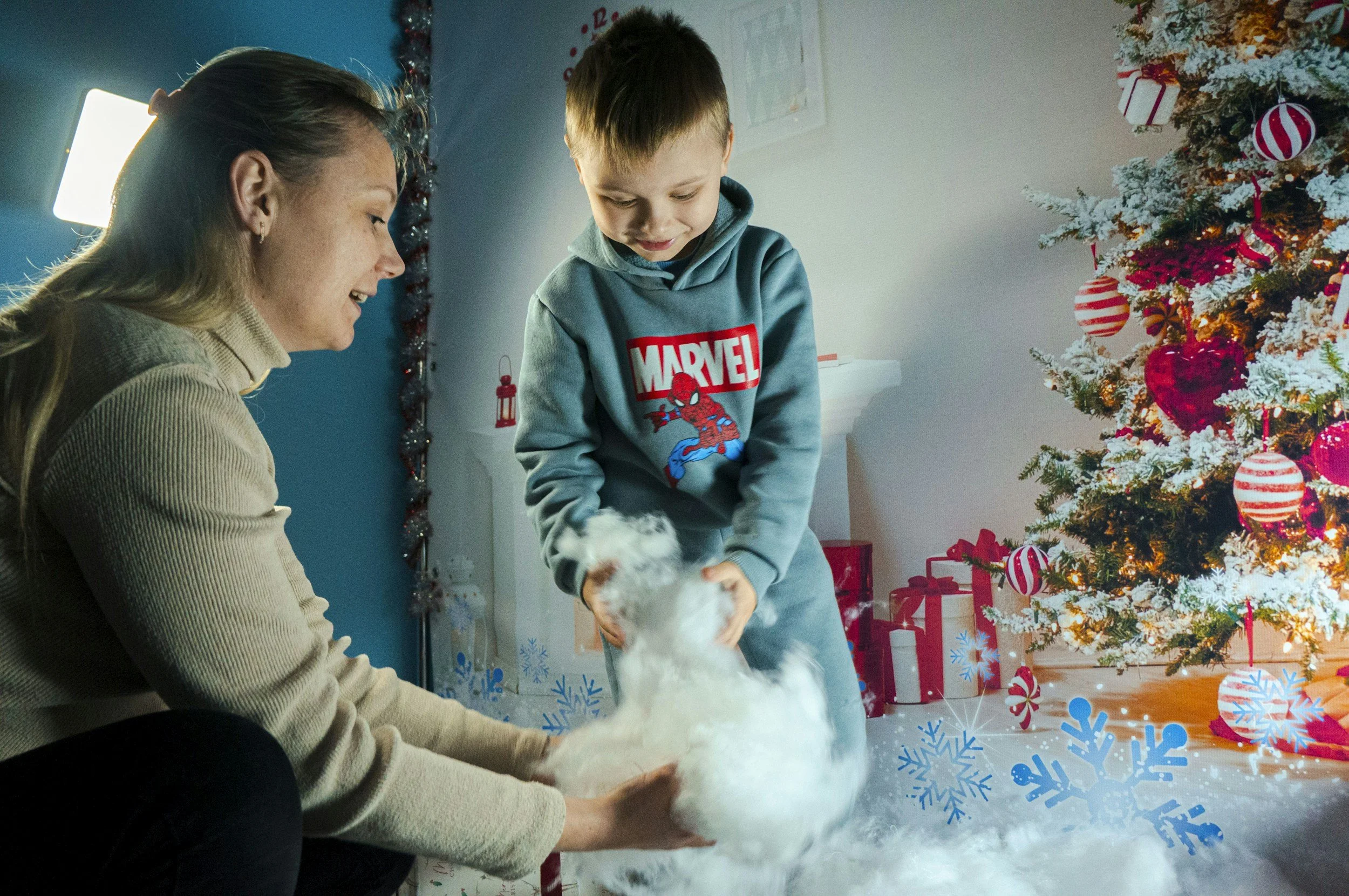
Kids don’t experience divorce the way adults do, and holidays add a bright-light backdrop to their feelings. Rather than memorizing age-by-age rules, it helps to understand the themes you’ll likely see across development, and how to meet them with care and consistency.
Time and transitions feel big. For younger kids, the world is organized by routines and people they trust, not calendars. Holiday schedules can feel like chutes and ladders: exciting one minute, disorienting the next. If your child seems clingier, more reactive, or more “off,” it doesn’t mean the season is ruined; it means their nervous system needs extra predictability. Help them anticipate what’s coming with visual or verbal anchors: a simple calendar on the fridge with stickers, or a nightly ritual where you preview tomorrow’s plan. Build in buffer time around exchanges for snack, snuggle, and a quiet reset.
Loyalty binds are real. Children love both parents. Even teens who act breezy can privately worry they’re hurting one of you by enjoying the other. You’ll hear this in little comments (“I don’t want Mom to be lonely”) or see it in over-the-top cheerfulness (“Everything is fine!”) that doesn’t quite match their eyes. Lower the pressure by naming the bind and taking it off their shoulders: “It’s okay to have fun at Dad’s. Grown-ups handle grown-up feelings, your job is to be a kid.” When you say this and mean it, you grant them permission to enjoy the very moments that help them heal.
Big feelings often show up as behavior. Sadness and worry can look like tantrums, snark, or shutdown. Younger children might regress (sleep hiccups, accidents, thumb-sucking) because regression is the nervous system’s way of seeking safety. School-aged kids may get perfectionistic or complain of tummy aches; teens may retreat to their rooms or push back hard against plans. Rather than taking the behavior at face value, ask yourself, What’s the unmet need underneath? Offer co-regulation first (calm presence, a slower pace, a snack, a walk), then revisit limits or logistics once everyone is calmer.
Kids crave honest, spare language. Children fill in blanks with worst-case stories. A few clear sentences spoken in a warm tone calm anxiety far more than long explanations. Keep it short and true: “We’re celebrating here on Thursday and with Dad on Friday. You don’t need to worry about grown-up plans, we’ve got that.” If something changes, give the new plan and validate the feeling: “I know you were looking forward to Grandma’s today. It’s okay to be disappointed.”
Freedom within structure matters more as they grow. Older kids and teens care about peers, sports, jobs, and sleep. The holiday shuffle can feel intrusive, even when they love family traditions. Whenever possible, offer choices within guardrails: “Our big dinner can be the 23rd or the 26th. What’s your preference?” or “You can do dessert with us or go to your friend’s party after we open gifts.” Respecting their autonomy increases buy-in and lowers the likelihood of last-minute battles.
Repair beats perfection. No holiday goes off without a wobble. What matters most for kids’ resilience is not a flawless day, but how you repair when things go sideways. A simple repair—“I got sharp earlier; I was stressed about the schedule. You didn’t do anything wrong. Can we restart?”—teaches them that relationships can bend and come back together. That lesson lasts longer than any present.
Extended Family: Boundaries With Love
Relatives may mean well and still add pressure. Scripts help you protect your energy:
To a pushy invite: “Thank you for the invitation. We’re keeping the day quiet this year. Let’s plan a shorter visit next weekend.”
To an intrusive question: “We’re keeping the details private, but we’re both working together and focused on the kids’ wellbeing.”
To gift overflow: “The kids are toggling between homes right now. Could we keep gifts to one or two each and experiences instead of big items?”
Remember: boundaries are a kindness that protect relationships over time.
Communication With Your Ex (That Lowers the Temperature)
Aim for brief, boring, and kind. Keep messages transactional and child-centered.
Use neutral channels. Co-parenting apps can timestamp agreements and reduce escalation.
Stick to facts. “Pick-up at 3:30 at Nana’s. We packed the warm coat.”
Save big topics for calm windows. Holidays aren’t the time to renegotiate custody; if needed, request a January meeting.
If conflict cycles run hot, therapeutic support can help differentiate practical problems from emotional triggers so you collaborate more consistently.
Celebrating Solo When the Kids Are Away
An empty house on a holiday can feel like too much space. Consider the difference between intentional solitude and lonely isolation and make a plan that holds you. For some, a quiet morning with a book, a long walk, and a favorite meal is deeply restorative. For others, connection matters: breakfast with a friend, a volunteering shift, a drop-in to a community event.
Skills for When Emotions Spike
Name the feeling. “This is sadness + nostalgia.” Naming calms the body.
Five-sense grounding. Name 5 things you see, 4 feel, 3 hear, 2 smell, 1 taste.
Co-regulate. Call someone who feels grounded; borrow their calm.
Shift state. Music, a brisk block walk, or a hot shower can reset your system.
If you’re overwhelmed: Step outside, feel your feet, and rest your eyes on a stable object for 30–60 seconds.
How Therapy Can Help (Individual, Co-Parenting, and Family Work)
Therapy offers a steady place to process grief and build skills for a different kind of holiday season—one aligned with your values and your kids’ needs.
Individual therapy can help you untangle shame, loneliness, and anger; set boundaries that stick; and create rituals that reflect who you are now.
Co-parenting work (sometimes with both parents present, sometimes individually) focuses on communication and conflict-reduction. Approaches like the Gottman Method can improve how you make and keep agreements (repair, compromise, shared meaning), while Emotionally Focused Therapy (EFT) helps each parent understand and regulate the emotions that fuel conflict, making collaboration easier.
Family sessions can support kids in sharing feelings, ease transitions between homes, and reduce loyalty binds.
Conclusion: You Can Craft a Season That Fits Your Life Now
You’re allowed to make this holiday smaller, quieter, or entirely new. You’re allowed to cry and laugh. You’re allowed to ask for help and to set limits. Most of all, you’re allowed to protect what matters—your wellbeing and your kids’ sense of safety and love.
If you’d like support navigating the holidays after divorce, our team offers warm, trauma-informed care for individuals and families. We see clients in person in Hermosa Beach, West Los Angeles and Beverly Hills and online across California. Reach out to schedule a consult—we’re here to help you build steadier traditions, one season at a time.
-
Keep the explanation short and neutral: “We’re celebrating here on Thursday and with Dad on Friday. You don’t have to worry about grown-up plans; our job is to make sure you have a good holiday.” Reinforce that they’re loved in both homes and don’t need to manage adult feelings.
-
Start with written proposals that center your child’s experience (rest, transitions, school events). If you’re stuck, consider a mediator or therapist skilled in co-parenting to facilitate. Courts and attorneys are last resorts—therapeutic support often protects relationships and reduces stress.
-
Slower is usually kinder. Holidays can be emotionally charged; adding a new partner may overwhelm kids. If you choose to include them, pick a low-key moment (an afternoon game) rather than high-stakes rituals. Share the plan with your co-parent when possible to avoid surprises.
-
Plan ahead for intentional connection (friend brunch or volunteering) and intentional care (a favorite meal, a long walk, a movie). Keep a short list of “go-to” supports for the day—names to call, grounding skills, and places you can drop in.
-
Post-event dips are common. Make space for recovery: extra sleep, gentle movement, and connection. If the distress lingers or intensifies, therapy can help you process grief and build a plan for steadier future seasons.
Disclaimer
This article is for educational purposes only and is not a substitute for professional advice, diagnosis, or treatment. If you are in crisis or need immediate support, call 911 or go to the nearest emergency room.