When 'Sleep When the Baby Sleeps' Doesn't Work: The Critical Link Between Exhaustion and Postpartum Mental Health
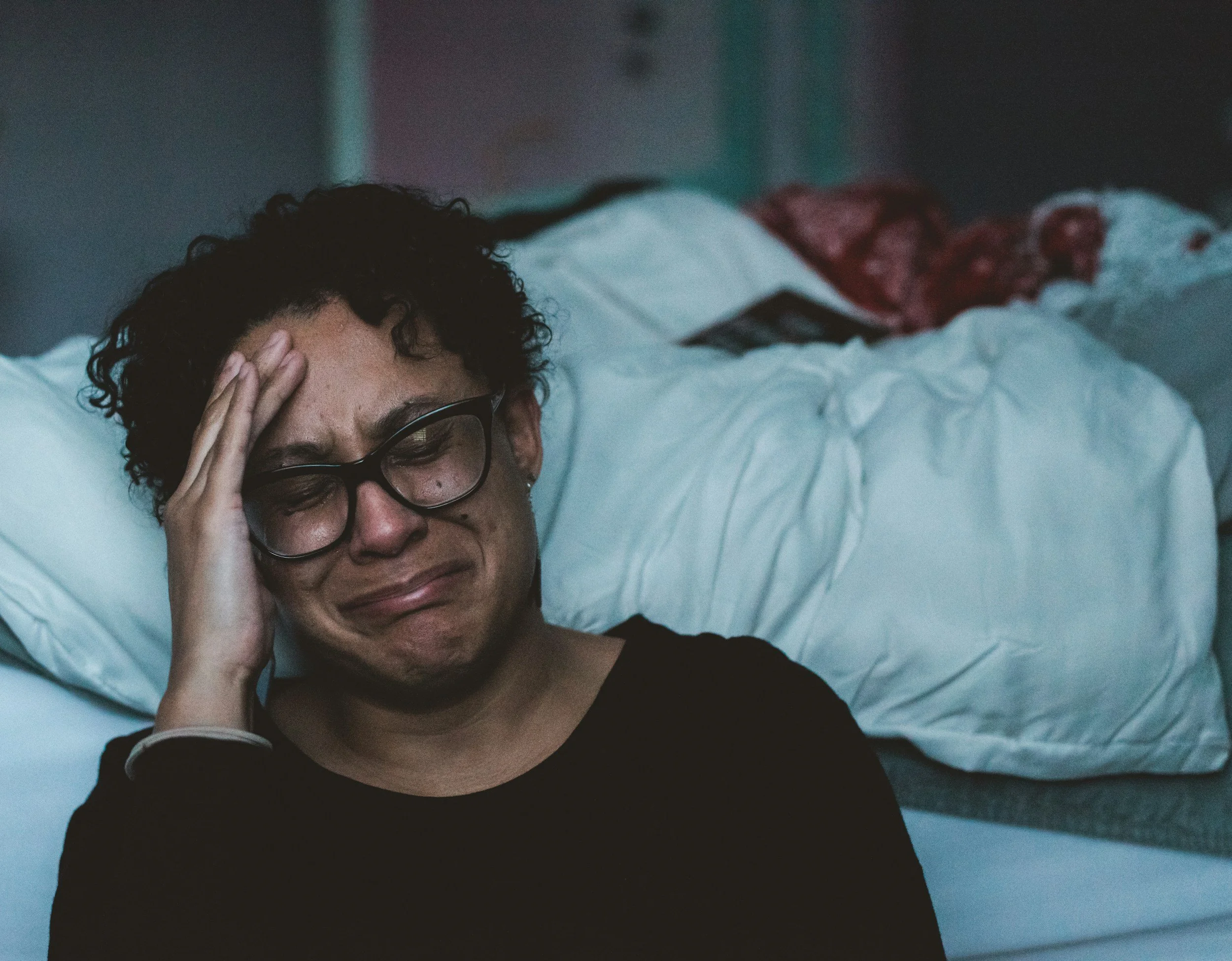
You haven't slept more than two consecutive hours in weeks. Maybe even months. Every time someone cheerfully tells you to "sleep when the baby sleeps," you want to yell. Because when the baby sleeps, you're doing laundry, or pumping, or finally eating something, or just staring at the ceiling trying to convince your body it's safe to rest.
And when you actually try to sleep, you can't. Your mind races. You listen for every breath, every sound. Or you finally drift off right as the baby wakes up again.
Everyone keeps saying "that's just what new moms deal with" or "you'll sleep when they're older." But something feels different. This isn't just tiredness. You're crying for no reason. You can't remember simple things. You feel detached from everything, or terrified of everything, or both at once.
What if this isn't just sleep deprivation? What if it's something more?
This post explores the critical connection between chronic sleep loss and postpartum depression and anxiety, why your body and brain respond the way they do, and what actually helps when you're caught in this cycle.
Key Takeaways
Sleep deprivation in the postpartum period isn't just uncomfortable; it's a genuine risk factor for postpartum depression and anxiety
Chronic sleep loss impacts your nervous system, hormone regulation, and brain function in measurable ways
"Sleep when the baby sleeps" doesn't work for many people because it doesn't address the underlying nervous system activation
Postpartum insomnia can be both a symptom and a cause of perinatal mood disorders
There are evidence-based interventions that can help, even when you can't control when the baby wakes
You're not weak for struggling with this, and you don't have to wait it out alone
The Sleep-Mental Health Connection No One Warns You About
Here's what most pregnancy books don't tell you: chronic sleep deprivation doesn't just make you tired. It fundamentally changes how your brain and body function.
Research published in the journal Sleep Medicine Reviews shows that sleep loss in the postpartum period is strongly associated with the development of postpartum depression and anxiety. And it's not just correlation; sleep deprivation actually alters mood regulation, stress hormone levels, and cognitive function.
When you're not getting adequate sleep, several things happen:
Your stress hormones stay elevated. Cortisol levels that should naturally drop at night remain high, keeping your body in a state of alert even when you desperately need rest.
Your mood regulation suffers. The parts of your brain responsible for emotional regulation (particularly the prefrontal cortex) don't function as well without sleep. This is why everything feels harder when you're exhausted.
Your anxiety increases. Sleep deprivation activates the amygdala, your brain's fear center, making you more reactive to perceived threats. This can show up as hypervigilance about the baby, intrusive thoughts, or generalized anxiety.
Your body can't recover. Postpartum recovery requires rest. Without it, physical healing slows, pain increases, and inflammation stays high.
This isn't about being weak, and it doesn’t mean you’re not cut out for motherhood. This is your nervous system responding to chronic stress in exactly the way it's designed to.
When Exhaustion Becomes Depression: Recognizing the Signs
So how do you know if what you're experiencing is "normal new parent exhaustion" versus something that needs intervention?
Here are signs that sleep deprivation has become a mental health issue:
You can't fall asleep even when you have the opportunity. Your baby is finally sleeping, you're exhausted, but your mind won't stop racing. Or you lie there feeling wired despite being physically depleted. This is postpartum insomnia, and it's both a symptom of and contributor to postpartum depression and anxiety.
You're having intrusive thoughts. Disturbing thoughts about something bad happening to the baby, or thoughts of harming yourself or the baby that feel alien and scary. These are common with postpartum anxiety and OCD, and sleep deprivation makes them worse.
You feel nothing. You're going through the motions, caring for the baby, but you don't feel connected. You might look at your baby and feel numb, or wonder if you even want to be doing this. That's not exhaustion; that's often a sign of postpartum depression.
You're crying all the time. Not just tearing up when you're tired, but crying so hard you can't catch your breath, or feeling on the verge of tears constantly. When everything makes you cry, that's your body telling you it's overwhelmed.
You're terrified something terrible will happen. Constant checking to make sure the baby is breathing, inability to let anyone else care for them, panic that something catastrophic is about to occur. Sleep deprivation amplifies anxiety, and anxiety prevents sleep. It becomes a vicious cycle.
Physical symptoms won't resolve. Headaches, nausea, dizziness, heart palpitations, or feeling like you can't take a deep breath. These can all be physical manifestations of anxiety and sleep deprivation.
If you're experiencing several of these, especially beyond the initial weeks of postpartum, this has moved beyond typical new parent exhaustion. And it may be time to reach out for support.
Why Your Nervous System Won't Let You Sleep
Here's the part that feels so frustrating: even when you have the chance to sleep, your body won't cooperate.
This isn't a personal failing. This is your nervous system stuck in a hypervigilant state.
In the postpartum period, your brain is biologically primed to be responsive to your baby. That's adaptive; it keeps your baby safe. But in some people, particularly those with a history of anxiety, trauma, or current high stress, this system gets stuck in overdrive.
Your nervous system starts interpreting everything as a potential threat. You can't fully relax because some part of you is always listening, always on alert. This is especially common if:
You experienced birth trauma. A difficult birth, medical complications, or feeling unsafe during delivery can leave your nervous system in a heightened state of activation. Your body learned that danger can come at any moment, and it's protecting you by staying vigilant.
You have a history of anxiety or trauma. If your nervous system learned early on that the world isn't safe, postpartum is a time when those patterns often resurface. You're caring for someone completely vulnerable, and that can trigger old protective responses.
You're not getting adequate support. If you're parenting alone, or with a partner who isn't sharing the load, or without family nearby, your nervous system knows you can't afford to fully rest. Because if you do, who's taking care of everything?
Cultural context matters here too. What used to feel "normal" or "safe" in your family of origin shapes how you respond now. Some clients grew up in households where vigilance was necessary for safety. Others come from cultures where postpartum rest and support are built into the structure, and now they're isolated. Understanding your patterns, including within your cultural context, helps make sense of why your body is responding this way.
The 'Sleep When the Baby Sleeps' Problem
So why doesn't "sleep when the baby sleeps" work?
Because it doesn't account for:
The mental load. When the baby sleeps, that's when you finally have a moment to do everything else that's piling up. Laundry. Dishes. Responding to messages. Pumping. Eating. Showering. The idea that you can just drop everything and nap assumes someone else is managing all of that. For many people, there isn’t a “someone else.”
The nervous system piece. Your body doesn't instantly shift from high alert to restful sleep just because you have permission to lie down. It takes time to downregulate, and if you only have a 20-minute window before the baby wakes again, your body might not even complete that transition.
The sleep debt. You're not just tired from last night. You're running on a deficit that's been building for weeks or months. One nap, or even several, doesn't erase that.
The anxiety. If you're struggling with postpartum anxiety, lying down to sleep might be when your intrusive thoughts are loudest. Or you might be too anxious about the baby to actually rest.
This doesn't mean you shouldn't try to rest when you can. It means we need better solutions than a piece of advice that rarely works in practice.
What Actually Helps: Evidence-Based Approaches
If sleep deprivation has become a mental health issue, here's what can help:
Stabilize symptoms first. Sometimes your body needs immediate relief before you can work on deeper patterns. This might involve:
Working with your doctor about medication for postpartum depression or anxiety
Implementing sleep hygiene basics (dark room, cool temperature, white noise)
Limiting caffeine after noon (we know this is hard, but it can help)
Getting outside in natural light during the day to help regulate your circadian rhythm
Get real support with night wakings. If you have a partner, this might mean dividing nights so you get at least one 4-5 hour stretch of uninterrupted sleep. Research shows that even one longer stretch of sleep significantly improves mood and functioning. If you're parenting alone, this might mean asking family, hiring overnight help, or working with your therapist to identify creative solutions.
Address the nervous system activation. This is where therapy becomes essential. We use approaches like:
Somatic work to help your body learn it's safe to rest
Cognitive strategies for managing intrusive thoughts and anxiety
Trauma processing (including EMDR when appropriate) if birth trauma or past experiences are keeping you in a heightened state
Couples work if resentment about sleep inequity is impacting your relationship
Explore the roots. Why is your nervous system stuck in overdrive? What patterns from your own upbringing or past experiences are showing up now? Healing at this level creates lasting change, not just symptom management.
Both/and approach. You need tools to manage symptoms now and support to heal deeper patterns. We work on calming your nervous system in the present while exploring what's keeping it activated. You don't have to choose between immediate relief and long-term healing.
When to Get Help
You don't need to be in crisis to deserve support. But here are signs that it's time to reach out:
You're having thoughts of harming yourself or the baby
You can't sleep even when you have the opportunity, for more than a few nights
Your anxiety is making it hard to function or care for the baby
You feel disconnected from the baby or from yourself
You're not enjoying anything, even things that used to bring you joy
Physical symptoms are interfering with your ability to parent or live your life
Postpartum depression and anxiety are treatable. Sleep issues in the postpartum period can improve with the right support. You don't have to suffer through this, and you definitely don't have to "just wait it out."
You're Not Just Tired
If people have been dismissing your exhaustion as "just what new moms deal with," and you know in your bones that something is wrong, trust that feeling.
You're not weak. You're not failing. Your body is responding to chronic sleep deprivation in exactly the way bodies respond: by trying to protect you, even if that protection is keeping you stuck.
There is help. And you don't have to wait until you're at your breaking point to ask for it.
Struggling with postpartum depression, anxiety, or sleep issues? Our therapists specialize in perinatal mental health and understand the complex connection between sleep deprivation and mental health. We offer both immediate symptom relief and deeper healing.
Frequently Asked Questions
Q: How much sleep do I actually need postpartum?
A: Most adults need 6-9 hours of sleep per night for optimal functioning. While you likely can't get that all at once with a newborn, even getting one 4-5 hour stretch of uninterrupted sleep can make a significant difference in mood and functioning.
Q: Is it normal to have insomnia even when I'm exhausted?
A: It's common, but it's not "just part of being a new parent." Postpartum insomnia is often a sign of anxiety or depression and should be addressed, and typically goes beyond “normal” postpartum sleep deprivation. If you regularly can't fall asleep when you have the chance, or you wake up and can't get back to sleep even when the baby is sleeping, talk to your doctor or therapist.
Q: Will medication for postpartum depression help with sleep?
A: Some medications used for postpartum depression and anxiety can improve sleep, though this varies. It's worth discussing with your doctor, especially if sleep deprivation is significantly impacting your mental health. Many mothers worry about medication while breastfeeding; there are options that are considered safe, and your doctor can help you weigh the risks and benefits.
Q: My partner says I should just nap when the baby naps. How do I explain why that doesn't work?
A: Share this article. Sometimes partners don't understand the mental load, the nervous system activation, or how chronic sleep debt works. If they're still not getting it, couples therapy can help you have this conversation in a supported space where both of you can be heard.
Q: Is this going to get better, or do I just have to survive until my baby sleeps through the night?
A: It can get better before your baby sleeps through the night. With the right support—whether that's therapy, medication, practical help with night wakings, or all of the above—your symptoms can improve even while your sleep is still disrupted. You don't have to just survive.
About the Author
Yael Sherne is a California licensed marriage and family therapist (LMFT 128601) and the founder of Mother Nurture Therapy Group. With nearly a decade of experience and specialized training in perinatal mental health, couples therapy, and trauma, she supports individuals and couples navigating fertility, pregnancy, postpartum, and parenting.
The content on this blog is for informational and educational purposes only and is not intended as a substitute for professional mental health treatment. If you are experiencing a mental health crisis, please call 988 (Suicide & Crisis Lifeline) or go to your nearest emergency room. Mother Nurture Therapy Group provides therapy services in California. For personalized support, please [contact us] to schedule a consultation.
